Connecting the Dots to Make Scholarly Content AI-Ready
TECH SHOWCASE
Connecting the Dots to Make Scholarly Content AI-Ready
Subramanian Mannahra
Lead Analytics Manager – Data & Insights
When The Answer Is There, But The System Can't Find It
A researcher might ask, “Why do some type 2 diabetes patients respond differently to the same drug?” The answer may be found distributed across three domains, rather than in a single paper:
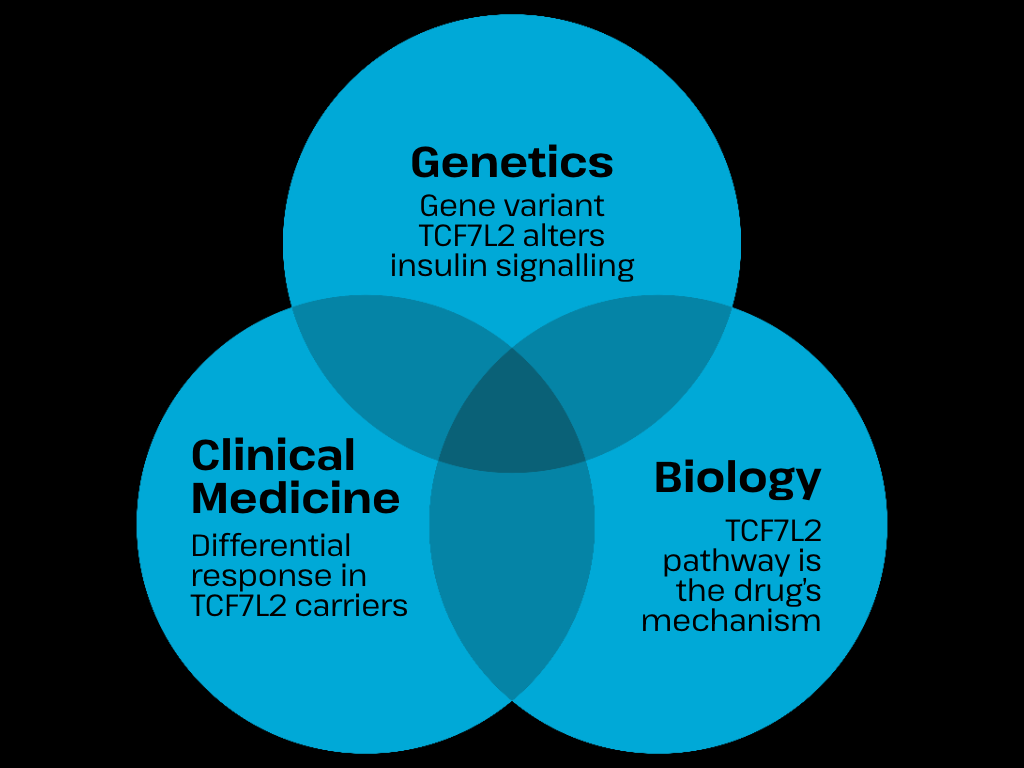
A genetics paper identifies a gene variant associated with altered insulin signalling.
A biochemistry paper describes how that same signalling pathway is the drug’s primary mechanism of action.
A clinical outcomes paper documents differential treatment response in patients carrying that variant.
But ask an AI system the question, and it is unlikely to connect these three papers. This gap between content that exists and content that AI can reason over is now the publisher’s problem.
A simple solution is to simply make content findable and understandable by tagging what things are, and mapping how they connect, i.e., content intelligence. AI systems are now consuming content on behalf of researchers, clinicians, and pharmaceutical teams, making content intelligence more important than ever.
Three disciplines, three papers, none citing each other.
Our Approach For Connecting Existing Knowledge
Tagging is where content intelligence begins. Identify what things are — entities, concepts, terms — and you have the foundation for building relationships between them. Tagging can connect them at the entity level, regardless of how differently each document is written.
But tagging domain-rich scientific content can be tricky. This is where domain expertise becomes important.
Even before we pick a model, we sit down with domain experts and ask: what needs to be extracted, and what are the rules?
Their answer becomes a schema.
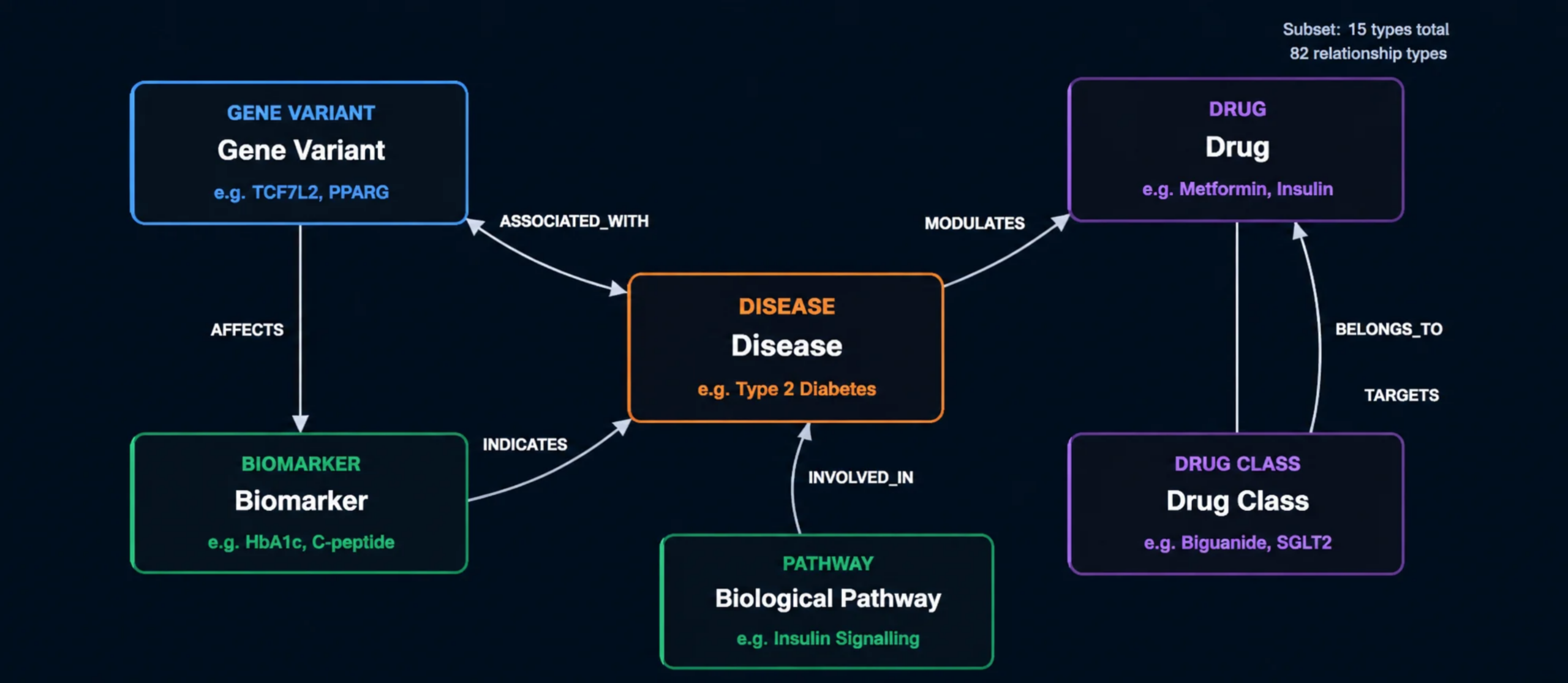
For our diabetes corpus, this meant 15 defined node types, 82 defined relationship types. Every term the AI extracts has to map to one of them. A drug connects to a drug class in defined ways. A gene variant connects to a disease through specific, named relationship types. Nothing outside those boundaries gets extracted.
The result is a knowledge graph with entities as nodes and relationships as edges. Every claim can be traced back to the exact sentence it came from.
A subset of the diabetes corpus schema. Every extraction must map to a defined node type, every connection uses a named relationship type. Nothing outside these boundaries is extracted.
Establishing A Knowledge Graph We Can Trust
A schema gives the AI direction, but direction doesn’t guarantee accuracy. This is where the subject matter expert (SME) review step becomes crucial. It’s where the quality of the final knowledge graph is actually determined.
Every extraction carries a confidence score. High-confidence results move forward automatically, and everything else goes to an SME. What the SMEs receive is not just raw AI output, but also the exact source sentence, the model’s reasoning, and a correction dropdown constrained to valid schema options.
Is a claim speculative or is it a negation? These flags travel with the extraction, so downstream AI systems know exactly how much weight to give each claim.
When a reviewer encounters a relationship the model found that isn’t yet in the schema, they flag it, and those flags are reviewed periodically so that the schema can improve.
What We Demoed At DataHack Summit, 2026
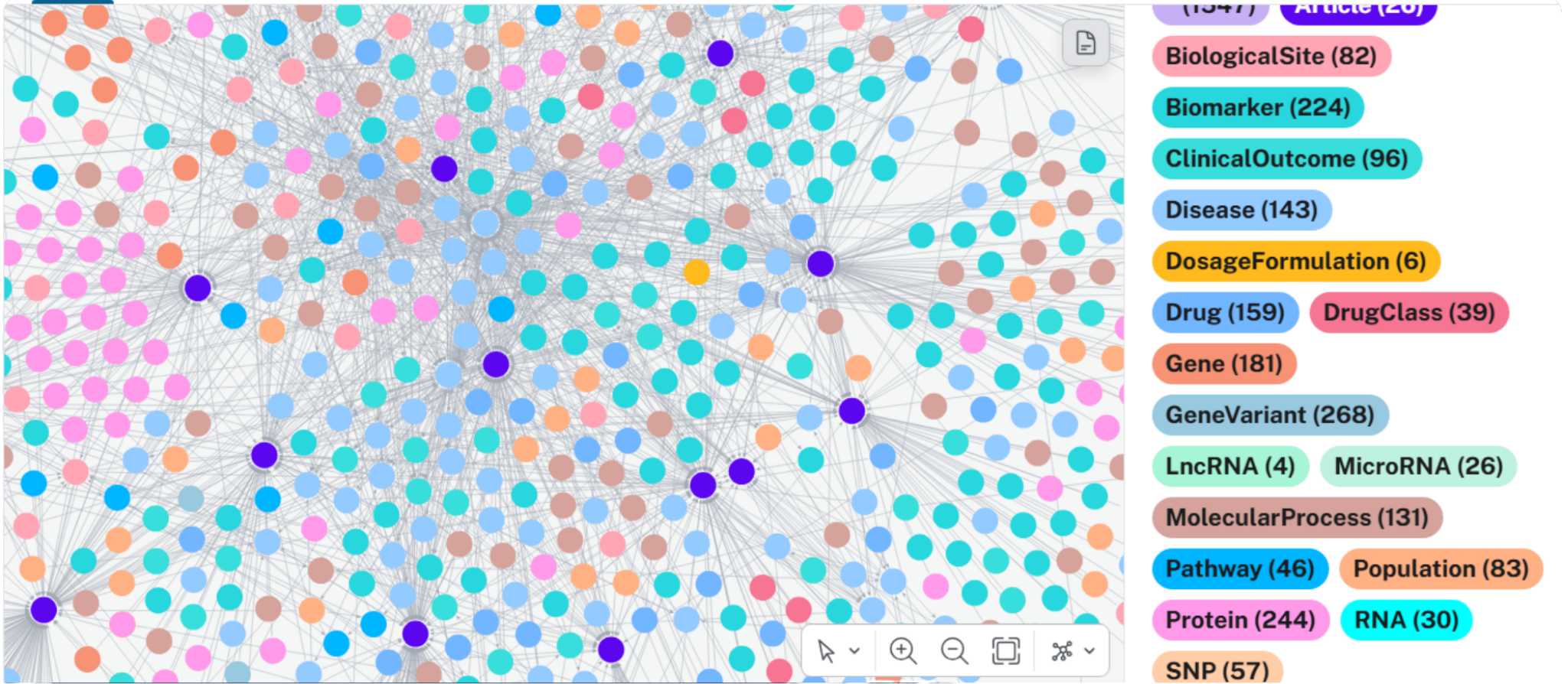
When all three papers are processed through the same schema, the gene variant, the biological pathway, and the drug all end up as nodes in the same graph. The connections emerge automatically, because the tagging is consistent across all three.
Rich connection of nodes (Tags) across multiple articles/domains — 1,347+ entities spanning 18 node types, interconnected through schema-defined relationships extracted from the diabetes corpus.
Rather than merely finding articles, content intelligence allows us to connect the knowledge inside them, across disciplines, at scale, without a human manually drawing the lines.
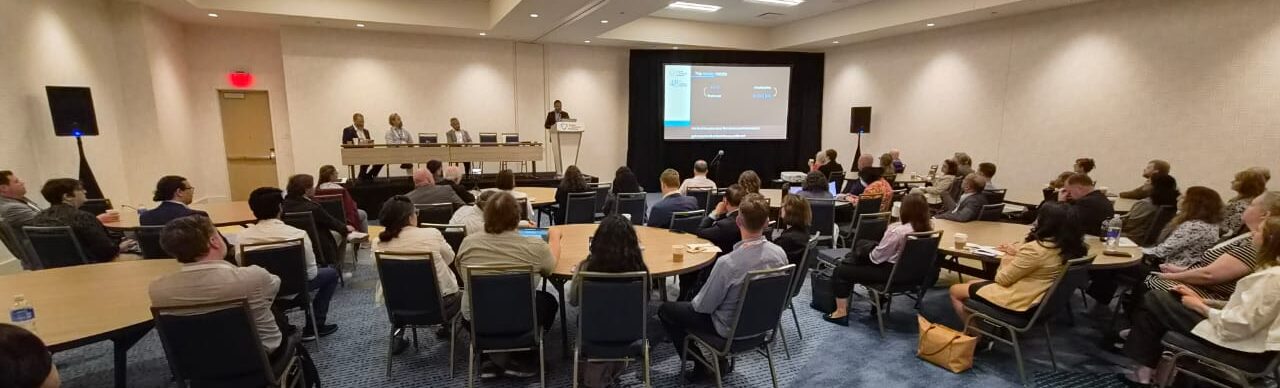
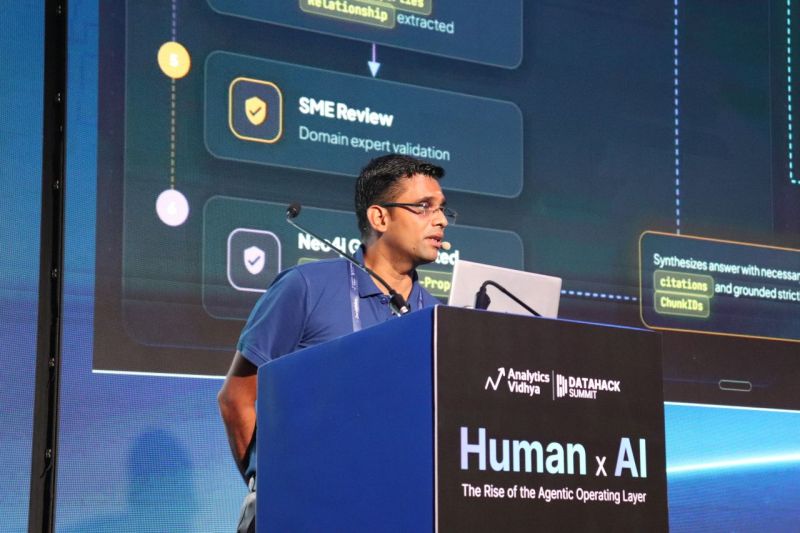
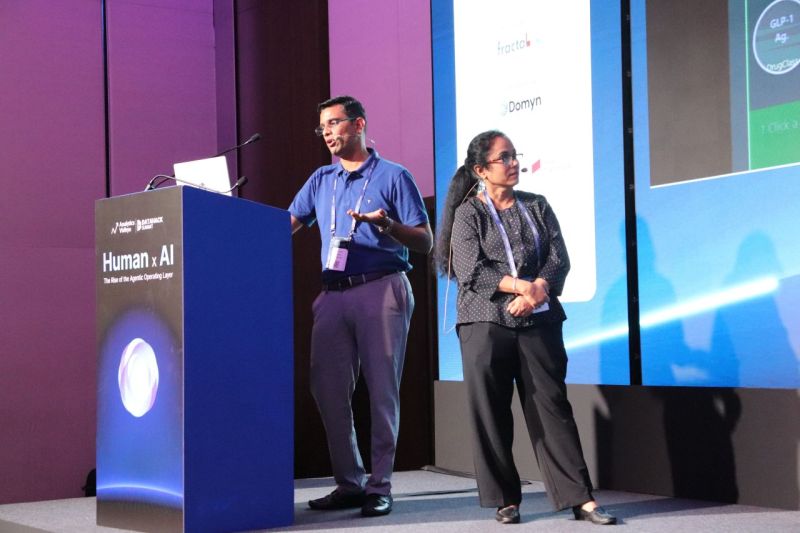
We presented this pipeline live at one of India’s largest data science conferences, DataHack Summit 2026, running on a real diabetes corpus, demonstrating graph-driven reasoning against plain retrieval on real cross-domain questions.
Subbu and Raji presenting TNQTech’s content intelligence pipeline at DataHack Summit, 2026
Helping Scholarly Publishers with Content Intelligence
For publishers, the effort to make scholarly content more readable to AI is not new. The harder question is what it takes to make that content reliable enough for others to build upon.
Our work with the diabetes corpus reinforced something important: extracting entities is relatively straightforward, but defining meaningful relationships, preserving scientific uncertainty, and tracing claims back to evidence require more thought and effort.
This is where content enrichment becomes interesting. Rather than finding another way to make articles discoverable, what if we built a foundation for knowledge products and services that researchers, institutions, and AI platforms can trust?
The opportunity is familiar. Making it consistently dependable, at scale, is the challenge.
We’re continuing to explore this at TNQTech. If you’re working through similar questions about content enrichment and AI, we’d welcome a conversation about what you’re learning too.